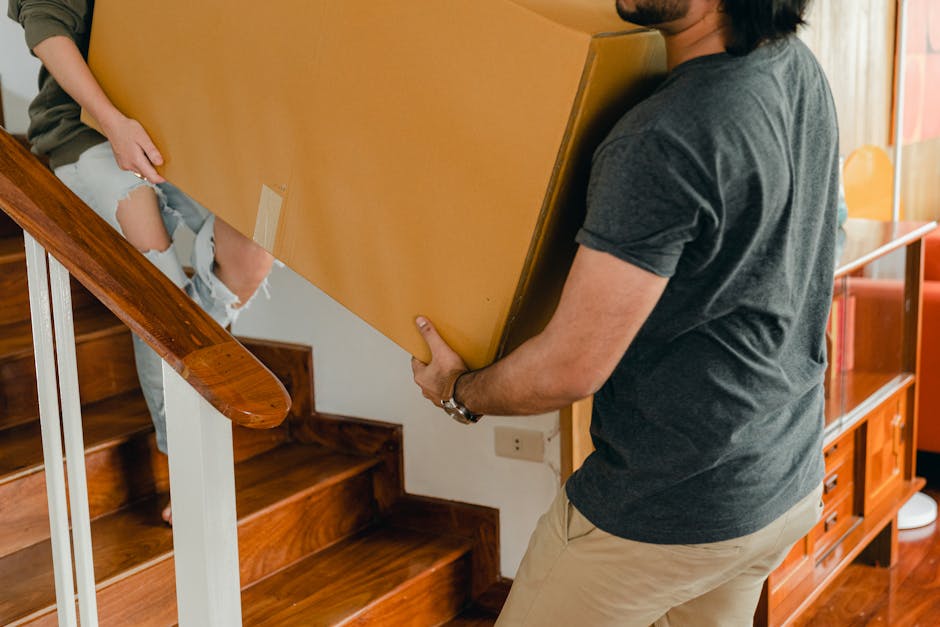
Narrow Stairs in Coombe? Bulky Item Moving Solutions That Actually Work
Trying to move a sofa, wardrobe, bed frame, piano, fridge, or other awkward item through narrow stairs in Coombe can turn a simple job into a full-blown puzzle. You look at the landing, the handrail, the wall corners, maybe that annoying low ceiling turn, and think: how on earth is this meant to fit? Truth be told, that reaction is completely normal.
This guide breaks down Narrow Stairs in Coombe? Bulky Item Moving Solutions in a practical, human way. You will learn how the process works, what to check before moving day, which methods are safest, and when it makes sense to get help rather than wrestling with an item and regretting it later. If you are planning a move, clearing a property, or replacing a large piece of furniture, this should give you a clear path forward.
For company background and service context, you can also review the team's about us page, or get in touch directly via the contact page when you are ready to discuss a move.
Table of Contents
- Contents
- Why Narrow Stairs in Coombe? Bulky Item Moving Solutions Matters
- How Narrow Stairs in Coombe? Bulky Item Moving Solutions Works
- Key Benefits and Practical Advantages
- Who This Is For and When It Makes Sense
- Step-by-Step Guidance
- Expert Tips for Better Results
- Common Mistakes to Avoid
- Tools, Resources and Recommendations
- Law, Compliance, Standards, or Best Practice
- Options, Methods, or Comparison Table
- Case Study or Real-World Example
- Practical Checklist
- Conclusion
- Frequently Asked Questions
Contents
- Why Narrow Stairs in Coombe? Bulky Item Moving Solutions Matters
- How Narrow Stairs in Coombe? Bulky Item Moving Solutions Works
- Key Benefits and Practical Advantages
- Who This Is For and When It Makes Sense
- Step-by-Step Guidance
- Expert Tips for Better Results
- Common Mistakes to Avoid
- Tools, Resources and Recommendations
- Law, Compliance, Standards, or Best Practice
- Options, Methods, or Comparison Table
- Case Study or Real-World Example
- Practical Checklist
- Conclusion
- Frequently Asked Questions
Why Narrow Stairs in Coombe? Bulky Item Moving Solutions Matters
Narrow stairs change everything. A bulky item that looked manageable in a showroom, or even in the back of a van, can become awkward the moment it reaches a tight staircase, a turn in the landing, or a low-ceiling hallway. In Coombe, as in many parts of London, homes often have a mix of period layouts, compact stairwells, split-level floors, and staircases that were never designed around modern oversized furniture.
That matters for three reasons.
First, safety. Moving heavy furniture on tight stairs increases the chance of slips, strains, scuffs, and broken items. One wrong angle and suddenly someone's fingers, the wall paint, or the item itself is in trouble.
Second, damage control. A bulky item can easily chip plaster, dent bannisters, scratch timber flooring, or mark carpets. It only takes a second. The sound of something scraping a wall is one of those little noises you never forget.
Third, time and stress. Let's face it, wrestling with a wardrobe for 40 minutes in a cramped stairwell is nobody's idea of a good afternoon. A well-planned approach saves effort and usually costs less than fixing avoidable damage later.
There is also a practical local angle. In a place like Coombe, access can vary from property to property, and the route matters just as much as the item itself. A move that works fine in a wide hallway may fail completely on a narrow turn halfway up the stairs. That is why good bulky item moving solutions are less about brute force and more about planning, measurement, protection, and the right technique.
Expert summary: If an item is large, heavy, fragile, or difficult to grip, narrow stairs should be treated as a planning problem, not a strength contest. The best results usually come from careful measuring, good protection, and the right moving method chosen before anyone starts lifting.
How Narrow Stairs in Coombe? Bulky Item Moving Solutions Works
A proper bulky-item move through narrow stairs is usually a process, not a single lift. It starts before the item ever leaves the room. The main goal is to identify the route, reduce risk, and choose the safest way to move the item without forcing it through a space it simply does not fit.
1. Assess the item and the route
Measure the item at its widest points. Then measure the staircase width, landing depth, ceiling height at turns, banister clearance, and any awkward corners. People often forget the diagonal line of travel, which is often the deciding factor. A wardrobe might be too wide upright but pass safely if tilted, rotated, or partially dismantled.
2. Decide whether dismantling helps
Some bulky items move better in pieces. Beds, tables, shelving, and modular wardrobes often benefit from careful dismantling. Not everything should be taken apart, though. With some furniture, dismantling can weaken joints or make reassembly fiddly. The trick is to know when it genuinely helps and when it just creates extra hassle. A bit of judgement goes a long way here.
3. Protect the property and the item
Professional-style moving usually involves blankets, corner guards, straps, shrink wrap where suitable, and floor protection. On narrow stairs, protection is not optional. Tight angles mean contact is more likely, so shielding edges and surfaces is part of the job, not an afterthought.
4. Use the right carrying method
Different items call for different handling. A sofa may need to be rotated vertically. A fridge may need to stay upright or within manufacturer guidance. A piano needs specialist handling because weight distribution is not intuitive. Sometimes a two-person carry is enough; other times you need extra hands, lifting aids, or a more technical approach. The right method depends on the item's shape, weight, balance, and fragility.
5. Move slowly and communicate constantly
In tight staircases, communication matters as much as strength. Short instructions, clear pauses, and one person calling the movement rhythm help prevent collisions. If you have ever watched people carry a double mattress down a narrow stairwell, you will know how quickly "just a little bit to the left" can become a highly technical negotiation.
6. Complete the move and inspect the route
Once the item is in place, check for any scratches, loose fittings, or marks on the stairwell. It is much easier to deal with a tiny scuff immediately than after everyone has gone home and forgotten which corner did it. That final check is a small thing, but a very sensible one.
Key Benefits and Practical Advantages
Using a structured solution for narrow stairs offers more than convenience. It changes the whole outcome of the move.
- Less risk of injury: Steep or narrow stairs create a poor carrying position, especially with heavy furniture. A planned approach reduces strain on backs, wrists, and shoulders.
- Lower chance of damage: Corners, banisters, and painted walls are vulnerable in tight spaces.
- Better control: Measuring, dismantling, and protecting items improves handling.
- Faster completion: What takes an unplanned team an hour of guesswork can often be done more smoothly with a proper plan.
- More predictable results: You know whether the item is likely to fit before you start.
- Less disruption: Important if you live in a shared property, need access at a certain time, or are working around neighbours.
There is also peace of mind. That sounds soft, but it matters. Once you know the route has been checked and the item has been assessed properly, the move becomes much less stressful. You are not guessing anymore.
For many households, bulky item moving is also part of a bigger transition: moving home, reorganising after renovations, clearing a room for a new arrival, or making space for storage. If you are comparing options for the wider move, the main site is a useful place to understand the broader service picture and decide what kind of support fits best.
Who This Is For and When It Makes Sense
This kind of moving solution is useful for a wide range of people, not just those shifting house. If your stairs are awkward and the item is bulky, the problem is the same.
Homeowners and renters
If you live in a terraced house, maisonette, flat, or older property with a tight stairwell, you are probably already aware that furniture does not always cooperate. A bed base that fits beautifully in the bedroom may still be a nightmare on the stair landing.
People moving a single heavy item
Sometimes you do not need a full removals job. Maybe it is just a sofa delivery, a chest of drawers, a washing machine replacement, or a treadmill that looked sensible in the catalogue and then arrived looking far larger in real life. That is when a focused moving solution makes sense.
Landlords, agents, and property managers
When a property needs clearing, repaired, or prepared for new tenants, time matters. Narrow staircases can slow everything down. A clear process helps reduce downtime and avoid complaints from neighbours or residents.
Families rearranging a home
Sometimes the trigger is not a move at all. It is a nursery setup, a home office, or a room refresh. Bulky items still need moving, even if nobody is changing address. That is one of those mundane life jobs that somehow takes over the whole weekend.
When it makes sense to get help
If the item is heavy, fragile, expensive, awkwardly shaped, or the staircase is especially narrow, the safer choice is usually to get assistance. It is especially sensible when:
- the item cannot be carried comfortably by two people
- the route includes a tight turn or low ceiling
- the item is valuable or hard to replace
- you are moving in wet weather and the stairs may be slippery
- you have no easy way to pause or reposition safely
Step-by-Step Guidance
If you want a practical way to approach bulky item moving on narrow stairs, use this simple sequence.
- Measure the item. Note the height, width, depth, and any protruding parts such as handles, feet, or arms.
- Measure the route. Check stair width, landing space, turning points, headroom, and door openings.
- Map the path. Decide where the item will start, pause, turn, and end. Do not improvise halfway through if you can avoid it.
- Decide if dismantling is worth it. Remove legs, shelves, cushions, or loose parts where appropriate.
- Prepare protection. Lay down floor coverings, cover bannisters, and protect corners.
- Assign roles. One person should lead the callouts. Nobody wants four people giving instructions at once. Chaos in a jumper.
- Test the angle. Try the safest orientation before committing to the full lift.
- Move in short controlled stages. Pause at landings and turns, reset grip, and communicate clearly.
- Set down carefully. Never drop an item just because you are nearly there.
- Inspect the space. Check the walls, bannisters, and item for marks or movement.
A small but useful tip: if the item is just a little too wide, do not assume "a squeeze will do it". That is often where damage starts. Sometimes the correct answer is to pivot, partially dismantle, or use a different route altogether. The stubborn approach can be expensive.
Expert Tips for Better Results
Over time, you start to notice the same difference-makers. These are the things that turn a stressful move into a controlled one.
Measure twice, move once
It sounds obvious, but many failed moves come down to one forgotten dimension. Measure the item with packaging removed if needed, and include anything that sticks out. A chunky handle can be the thing that stops the whole move.
Think in angles, not just straight lines
Most narrow-stair moves are solved by rotation. The item may need to go up or down diagonally, upright, or tilted. This is especially true for sofas, mattresses, wardrobes, and long appliances. The route is often less forgiving than it first looks.
Protect the corners first
Stair corners and wall edges take the most contact. If time is short, prioritise those areas. You can always tidy the rest later, but you cannot unchip plaster. Small detail, big difference.
Use the right footwear and gloves
Good grip matters. Gloves can help with traction and comfort, especially with awkward surfaces. Slippery soles and tired hands are not a great combination on stairs.
Keep the route clear
Remove loose rugs, shoes, bags, pet bowls, and anything else that might get in the way. The cleaner the route, the calmer the move. One less thing to trip over, which is nice.
Know when to stop
If the item jams, tilts dangerously, or strains the people carrying it, stop and reassess. Pushing harder is not always the solution. Often it just creates a worse angle.
One more thing: if you are working in a home with limited daylight or a dim stairwell, make sure the route is properly lit. Evening moves can feel trickier than they are simply because shadows make depth and edges harder to judge.
Common Mistakes to Avoid
Most moving problems are preventable. The same mistakes come up again and again.
- Skipping measurements: Guessing based on appearance is risky. Big items look smaller at the shop and larger on the stairs. Funny how that works.
- Forgetting the route geometry: Width is only part of the story. Turns, ceilings, and landing depth matter too.
- Not removing loose parts: Cushions, doors, legs, and shelves can make a move more awkward than necessary.
- Underestimating the weight: Some items feel manageable until they are halfway on the stairs.
- Rushing the turn: Most damage happens at corners, not on the straight sections.
- Ignoring wall protection: Even a light brush can leave a mark.
- Using too many instructions: One lead voice keeps the team calmer and safer.
- Assuming every item can be forced through: Sometimes the item needs a different route, a different orientation, or a professional approach.
If you are not sure whether the item will fit, that uncertainty is a signal in itself. It usually means you need more information before anyone starts lifting.
Tools, Resources and Recommendations
You do not need a warehouse of kit to move bulky items safely, but the right basics help a lot.
| Tool or Resource | What It Helps With | Best Used When |
|---|---|---|
| Measuring tape | Checking item and route dimensions | Before any lifting starts |
| Moving blankets | Protecting walls, bannisters, and furniture edges | On tight staircases or delicate surfaces |
| Corner guards | Reducing impact on wall corners | When turns are especially narrow |
| Straps | Improving grip and balance | For awkward or heavy items |
| Gloves | Better handling and hand protection | For rough surfaces or long carries |
| Floor protection | Preventing scratches and dirt transfer | On carpet, wood, or polished steps |
| Dismantling tools | Removing parts to improve fit | For modular furniture or flat-pack items |
Useful recommendations, in plain English:
- Keep a pencil note of every measurement rather than relying on memory.
- Photograph awkward corners so you can plan the route properly.
- Have a second person check the measurements if the item is unusually tight.
- Protect the stairwell before the item moves, not after the first scrape.
- Choose the least damaged route, not just the shortest one.
If you need to discuss moving arrangements, storage, or a more complex access situation, it can help to contact the team early through the contact page rather than leaving it until the last minute.
Law, Compliance, Standards, or Best Practice
For a domestic bulky-item move, there is usually no special legal hurdle unique to narrow stairs, but there are still sensible UK best practices to follow. The main concern is safe manual handling and avoiding avoidable damage or injury. That means planning the lift, not overloading people, and using safe technique rather than simply hoping the item will behave itself.
In practical terms, that usually means:
- not asking one person to handle a load that clearly needs two or more people
- using proper footwear and grip
- keeping walkways clear
- avoiding unsafe twisting while carrying
- protecting shared areas in flats or converted properties
If the move involves a common hallway, shared stairwell, or managed property, it is also sensible to check any building rules, access arrangements, or timing considerations with the landlord, managing agent, or neighbours where needed. Nothing dramatic, just good manners and a smoother day for everyone.
For privacy or service terms questions while arranging help, it may also be useful to review the site's privacy policy and terms and conditions. That is especially handy if you are sharing access details, booking information, or special instructions.
Options, Methods, or Comparison Table
There is no single "best" method for every narrow-stair move. The right choice depends on the item, the stairwell, and how much risk you are willing to take on. Here is a simple comparison that helps clarify the decision.
| Method | Best For | Pros | Limitations |
|---|---|---|---|
| Carry as-is | Moderate items with a clear route | Fast and simple | Risky if the item is too wide or heavy |
| Dismantle and reassemble | Modular furniture, beds, shelving | Easier through tight spaces | Needs tools and careful reassembly |
| Rotate through the stairwell | Sofas, mattresses, wardrobes, appliances | Often solves tight corners | Requires coordination and space at the turn |
| Use specialist handling | Pianos, heavy safes, fragile large items | Safer and more controlled | May require extra planning and cost |
| Alternative access route | Items that fail the stair test | Avoids forcing a bad fit | May depend on property layout and access |
Sometimes the simplest route is not the front staircase at all. A different entrance, a wider hallway, or a ground-floor access point can change the whole job. You will often save time by asking that question early: is there another way in or out?
Case Study or Real-World Example
Here is a realistic example from the kind of situation people run into all the time. A couple in Coombe needed to move a large three-seat sofa into an upstairs living room in a house with a tight stair turn halfway up. The sofa looked fine in the hallway. Up the stairs, it was another story.
The first attempt, done without measuring the full turning space, got the sofa partway round the corner and then stopped dead. Not stuck enough to panic, but awkward enough to make everyone go quiet for a moment. You know that silence. The fix came from stepping back, removing the sofa feet, covering the stair corner with protection, and rotating the item more vertically than expected. Once the angle was right, it moved cleanly, though slowly.
The key lesson was not strength. It was preparation.
By checking the route properly, changing the carrying angle, and protecting the stairwell first, the item was moved without damage or strain. That is exactly the sort of outcome these solutions are meant to deliver. Not glamorous. Just effective.
This is also why many people prefer a professional conversation before moving day rather than after the item is wedged halfway up the staircase. A quick planning call can save a lot of drama, and a lot of sweating too.
Practical Checklist
Use this checklist before you attempt a bulky-item move on narrow stairs in Coombe.
- Measure the item at its widest, tallest, and deepest points.
- Measure the full route, including turns and landings.
- Check for low ceilings, radiators, lamps, or door handles that might obstruct movement.
- Decide whether the item can be dismantled safely.
- Clear the stairs, hallway, and landing of loose objects.
- Protect walls, corners, bannisters, and floors.
- Make sure at least one person leads the communication.
- Wear suitable footwear and gloves if needed.
- Plan where the item will pause if you need to reset grip or angle.
- Confirm whether there is an alternative access route.
- Review booking details, access notes, and any property rules in advance.
- Stop immediately if the item becomes unsafe to carry.
Quick reality check: if you are unsure about three or more items on this list, the move probably deserves a more careful plan. That is not overthinking. That is just sensible.
Conclusion
Narrow stairs do not have to make bulky-item moving impossible. They do, however, demand a better method. Measure properly, protect the route, choose the right carrying angle, and be honest about the item's limits. That simple discipline turns a difficult job into a manageable one.
If you are moving furniture, appliances, or other large items in Coombe, the smartest approach is the one that keeps people safe, protects the property, and avoids forced moves that could go wrong in a heartbeat. A calm plan beats a heroic struggle every time. Almost every time, anyway.
For service details and support options, you can explore the main website or read more about the team on the about us page. If you are ready to discuss your move, ask questions, or explain a tricky staircase, the contact page is the best next step.
Get a free quote today and see how much you can save.
And if the staircase looks impossible right now, that does not mean it is impossible tomorrow. Sometimes it just needs the right hands, the right angle, and a bit of patience.
Frequently Asked Questions
Can bulky furniture really be moved up narrow stairs in Coombe?
Often, yes. It depends on the item's shape, weight, and whether the staircase has enough turning space. Many items can be moved if they are measured properly, angled correctly, or partially dismantled first.
What is the first thing I should check before moving a large item?
Measure the item and the staircase route. Include landings, corners, and any low ceilings. People often check only the stairs themselves, and that is where surprises begin.
Do I need to dismantle furniture before moving it through narrow stairs?
Not always. Dismantling helps with many beds, wardrobes, and modular items, but some furniture is safer to move intact. The best choice depends on the design and how the route is laid out.
What items are hardest to move on narrow stairs?
Sofas, wardrobes, mattresses, fridge freezers, pianos, and large exercise equipment are often the trickiest. Anything wide, heavy, or awkward to grip can be difficult in a tight stairwell.
How do movers protect walls and bannisters?
They typically use blankets, guards, wrapping, and floor protection. The goal is to reduce contact damage during turns, pauses, and repositioning.
Is it safer to move heavy items with two people or more?
Usually, yes, but only if the group is coordinated. Too many people without a clear lead can actually make the move less safe. One person should give instructions.
What if the item gets stuck on the stairs?
Stop moving immediately and reassess the angle, grip, and route. Forcing it can damage the item or the property. Sometimes the safest fix is to rotate, lower, or partially dismantle the item before trying again.
Are there any special rules for moving bulky items in shared buildings?
Shared buildings often have practical rules about access, timing, or protecting communal areas. It is sensible to check those details in advance with the landlord, agent, or building manager.
How far in advance should I plan a bulky-item move?
As soon as possible, ideally before the item arrives or before move day. Early planning gives you time to measure, organise helpers, and decide whether a different access route is needed.
Can I move a fridge or washing machine on narrow stairs?
Sometimes, but those appliances need careful handling. Weight, balance, and manufacturer guidance matter. If the route is tight or the item is especially heavy, professional help is usually the safer option.
What if the staircase is too narrow for the item?
Then you need an alternative plan. That might mean dismantling, using a different route, or arranging specialist support. Forcing the issue is rarely worth the risk.
How do I know whether I should ask for professional help?
If you are uncertain about the fit, the weight, the turn, or the safety of the lift, it is a good sign to get help. A short conversation before the move can save a lot of trouble later.